Urban Poverty and Homelessness in Bihar
Bihar has witnessed a significant increase in urban population growth, leading to a complex socio-economic process. This shift from rural to urban areas not only changes the social fabric and demographic structure but also affects occupations, lifestyles, cultures, and behaviors. While this is a common phenomenon, its manifestations vary across regions and the development levels of cities.
Patna, the capital of Bihar, is one of the fastest-growing cities in India. Despite being a place of opportunities, Patna has long been one of the poorest urban settlements in India. Many migrants struggle to access the benefits available in cities, facing issues related to basic amenities such as safe housing, humane working conditions, nutrition and food security, protection from abuse and violence, safe drinking water, affordable quality education, and healthcare.
The city administration often overlooks the problems of the urban poor, homeless unorganized workers, and domestic women, resulting in actions like demolition of huts without notice and forceful beatings. This exclusion from government policies and provisions leads to significant challenges for these vulnerable populations.
Slum Vikas Samiti: Empowering the Urban Poor
Dalit Vikas Abhiyan Samiti (DVAS) has formed the Slum Vikas Samiti to ensure the self-respect and security of the urban poor, homeless, unorganized workers, and domestic women. The organization empowers them by training them in community development, ward development committees, cleanliness programs, inclusive development, youth education, and adolescent girls' health protection.
This work is being carried out in 50 slums across 50 municipal wards in Patna, Bodh Gaya, and Samastipur districts. The Ambedkar Jagajgi Shiksha Kendra connects homeless children with education, ensuring implementation of the Right to Education Act by enrolling these children in private schools. The Samul Vikas Samiti Federation amplifies the voices of the people and ensures their inclusion in civic development.
Supporting Urban Poor During COVID-19
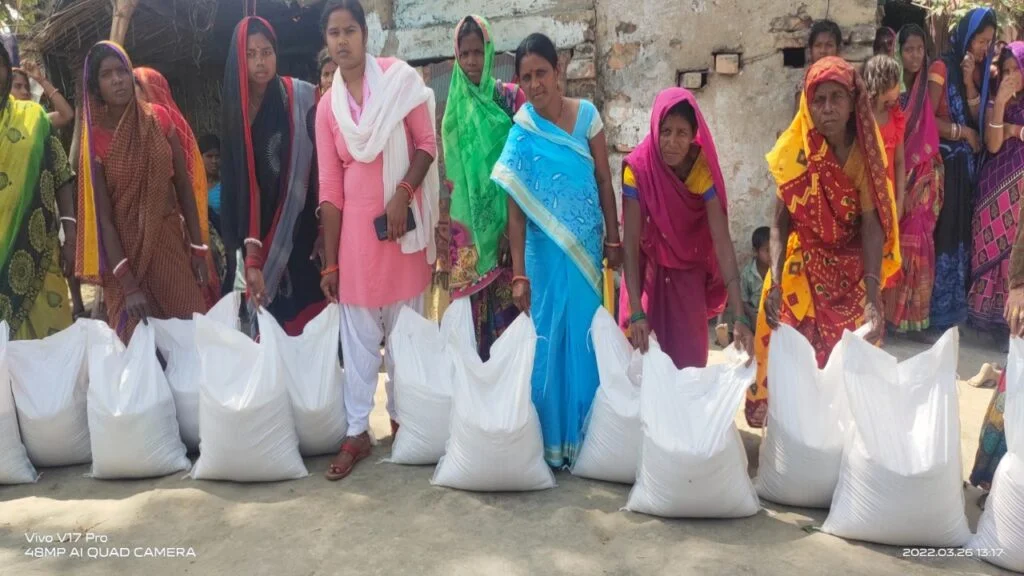
In response to the COVID-19 pandemic, DVAS collaborated with district and state government departments to implement special measures to prevent the spread of the virus among the homeless and under-housed in Patna. The organization provided financial assistance to 500 vendors, including those running vegetable stalls, rickshaw services, tea and litti-pakora shops, fish stalls, and hawkers, ensuring sustainable livelihood options.
These vendors were registered under the State Urban Livelihood Mission (SULM) and identity cards were issued to 3,500 homeless people, unorganized laborers, and domestic workers. Additionally, 4,800 poor families were registered as Below Poverty Line (BPL) and linked to the Public Distribution System (PDS) for monthly food supplies.
DVAS also promoted linkages with social security schemes to integrate informal sector workers into the mainstream economy and enhance their stability.
Collaborating for Inclusive Urban Development
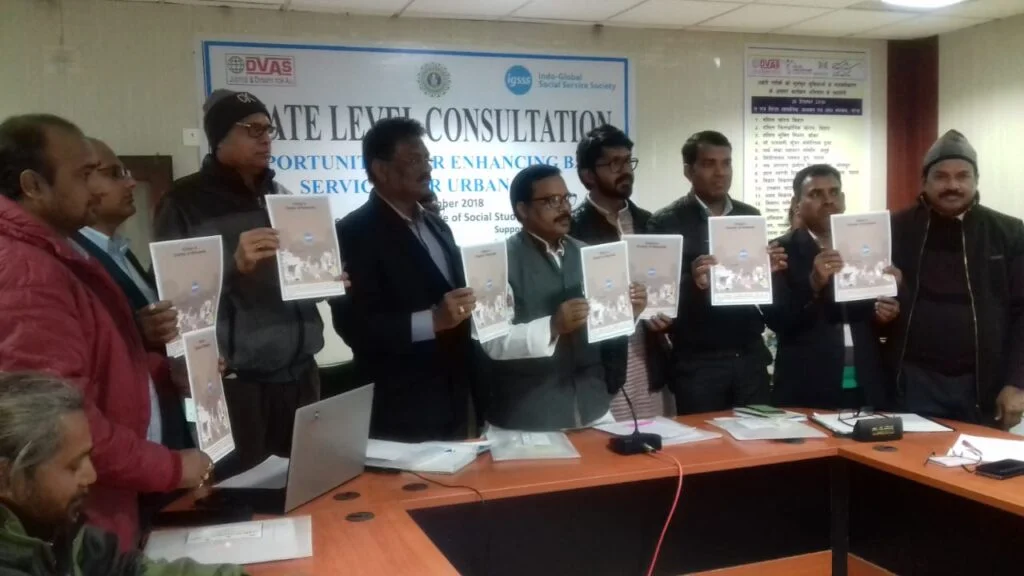
DVAS has extensive experience working with civil society organizations, political representatives, and socially prominent individuals in Patna and Bodh Gaya on urban poverty issues. The organization runs state-level campaigns for the urban poor and homeless, aiming to connect them with the mainstream and ensure their inclusion. Through these collective efforts, DVAS envisions a just, inclusive, and sustainable urban future for Bihar’s marginalized communities.